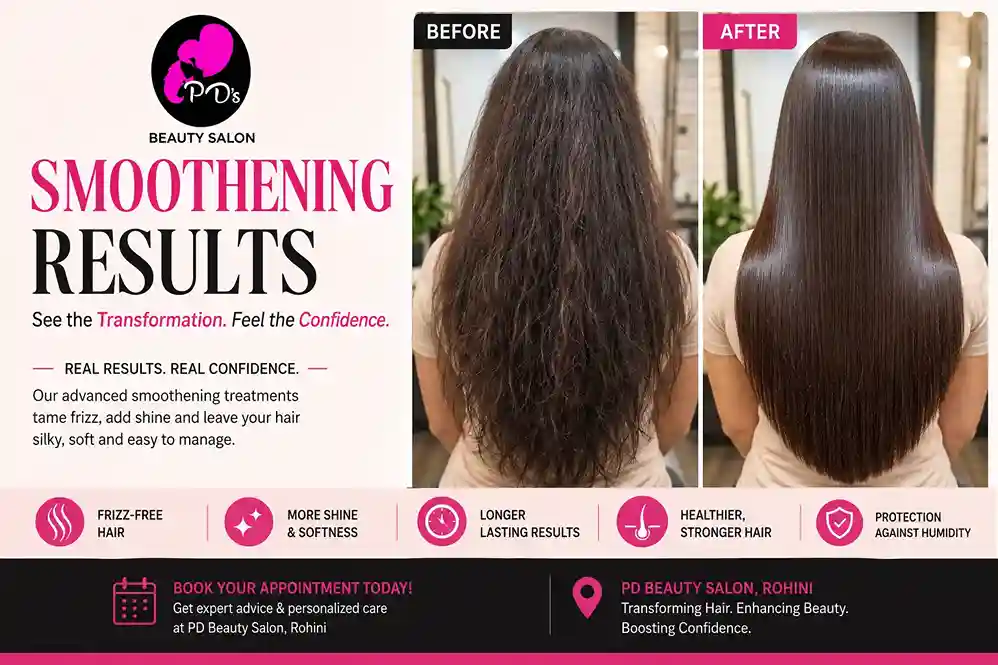
Quick Summary:
After getting your hair smoothened, the real work begins at home. The first 72 hours are crucial — don't wash your hair, tie it tightly, or sweat too much. One of the biggest game-changers? Ditching your regular shampoo for a sulfate-free one. Most people skip this and wonder why their results fade so quickly.
Try to wash your hair only 2–3 times a week, use a light conditioner, and do a protein mask once a week. Stay away from heavy oiling, chlorine, and daily straightening — these quietly ruin the treatment. With the right routine, results can genuinely last 4–6 months.
Sound familiar?
Most of the time, it is not the treatment's fault. It is what happens — or does not happen — in the weeks after. At PD Beauty Salon in Rohini, we see this constantly. Clients come back saying their results did not last, and the issue almost always traces back to one or two aftercare habits that quietly undid everything the treatment did.
Delhi's humidity, hard water, and pollution are genuinely unforgiving on treated hair. But the right routine makes a real difference — and after fifteen years of treating Delhi hair, we have worked out exactly what that routine looks like.
"The treatment we apply in the salon is only half the result. The other half happens at home over the following weeks. I always tell clients: your shampoo choice alone will decide whether your results last three months or six. That is not an exaggeration."
— Pooja Deveshwar, Founder, PD's Beauty Salon
Why Aftercare Matters More Than Most People Realise
Hair smoothening works by relaxing the hair's internal structure and sealing the cuticle flat. That closed, sealed cuticle is what gives you the shine and frizz-free texture. The problem is that it is also vulnerable — especially in the first few weeks when the bonds have not fully set.
Three things work against it simultaneously in Delhi:
Sulfate shampoos strip the treatment along with the hair's natural oils — undoing weeks of work with every wash.
Hard water deposits minerals that gradually roughen the cuticle from the outside, dulling the finish and reintroducing texture.
Humid air — especially during monsoon months — forces the cuticle open again if it has not been properly sealed and maintained.
All three working together is why results fade so fast when aftercare is neglected. The good news is that addressing even one or two of these makes a significant difference.
The First 72 Hours — This Window Matters Most
Most clients do not treat the first 72 hours seriously enough. We do — and it is the first thing we walk through before a client leaves the salon after a smoothening session at PD Beauty.
Do not wash your hair for at least 72 hours. The treatment needs time to fully bond, and water disrupts that process before it is complete. This includes sweat — skip intense workouts during this window too.
Do not tie your hair tightly or use clips. Pressure during this period creates bends in the hair that can become semi-permanent. Sleep with your hair loose or in a very low, soft braid. If you wake up with a kink, a flat iron on low heat fixes it immediately — do not leave it.
Switch to a silk or satin pillowcase if you can. Cotton creates friction against the hair while the treatment is still setting. It sounds like a small thing, and it genuinely is not.
The Hair Care Routine That Actually Works After Smoothening
Shampoo — the single most important change
Switch to a sulfate-free shampoo immediately. This is non-negotiable, and it is the advice we give every single client. Most supermarket shampoos are sulfate-heavy and will undo a professional smoothening treatment from the very first wash. If you have invested in the treatment, it makes no sense to compromise on the one product that protects it daily.
Look for sulfate-free, paraben-free formulas labelled "smoothing" or "colour-safe." Ingredients like argan oil, keratin, or silk proteins are what you want to see. Avoid clarifying shampoos and volumising shampoos entirely — both are too harsh, and volumising formulas actively roughen the cuticle.
Wash two to three times a week, not daily. Daily washing strips results faster than almost any other habit.
Conditioning and weekly care
Use a lightweight conditioner every wash, focused on mid-lengths and ends — not the scalp. A weekly protein mask helps maintain hair strength, which is particularly important in Delhi's pollution and heat. A leave-in serum applied to damp hair before blow-drying adds a protective layer against humidity.
For monsoon months specifically — July through September — an anti-humidity spray is worth keeping. Delhi's monsoon is genuinely brutal on smoothened hair, and this one product makes a noticeable difference.
Tools and techniques
Use a wide-tooth comb on wet hair, never a brush. Wet hair is at its most vulnerable — be gentle post-wash. A microfiber towel instead of regular terry cloth reduces friction and frizz during drying.
Always use a heat protectant before blow-drying or flat-ironing. Smoothed hair tolerates heat well, but without protection, cumulative heat damage quietly builds over weeks.
Common Mistakes That Ruin Results — What We See Most Often
The wrong shampoo. As mentioned above, this one mistake undoes more treatments than anything else we observe. We have had clients return after six weeks, saying their results had almost completely faded, and the cause was a sulfate shampoo used daily. One product change would have given them three more months.
Excessive oiling. Heavy oils applied to the scalp feel nourishing but require aggressive washing to remove — which means more shampoo, more stripping, more fading. A light serum on the lengths and ends is fine. Scalp oiling in the first month after smoothening actively works against the treatment.
Chlorine exposure. Swimming in a chlorinated pool can visibly affect texture even after a single session. If you cannot avoid it, apply a leave-in conditioner to your hair as a barrier before getting in, and wash and condition properly immediately afterwards.
Daily flat ironing. If you are still straightening your hair every day after a smoothening treatment, either the treatment did not work as expected, or the aftercare routine needs revisiting. Smoothed hair should not need a flat iron daily — that is the point of the treatment. Frequent heat use on treated hair creates cumulative damage that compounds over time.
Not trimming. Split ends travel upward on treated hair faster than on natural hair. A trim six to eight weeks after treatment protects the overall texture from deteriorating from the ends up.
How Long Does Hair Smoothening Actually Last?
With proper aftercare, four to six months is realistic. Without it, results can fade by the second or third month.
Hair texture plays a role, too. Coarser, thicker hair holds the treatment longer than fine hair. The quality of products used during the treatment also affects longevity significantly, which is one reason we use only professional-grade products at PD Beauty Salon and never compromise on this, regardless of the package.
"One client who visits us regularly in Rohini has been getting smoothening here for three years. She follows the aftercare we gave her properly — sulfate-free shampoo, protein spa every six weeks, no heavy oiling — and she consistently gets five to six months from every treatment. That is not luck. That is what proper aftercare actually delivers when someone takes it seriously."
— Pooja Deveshwar
Signs your treatment is fading: frizz returning at the roots first, hair feeling drier than it should, and texture roughening noticeably after washing. These signal a maintenance appointment — not necessarily a full redo.
Can You Oil, Colour, or Curl Smoothened Hair?
Oiling: Light oiling on the lengths is fine after two weeks. Avoid heavy scalp oiling for the first month.
Colouring: Wait at least three to four weeks before colouring. Hair colour chemicals can interfere with treatment bonds if applied too soon. If you are planning both at the same time, speak to your stylist beforehand — some treatments are significantly more colour-compatible than others. Our nanoplastia vs keratin guide covers this in detail if you are weighing your options.
Curling: Occasional curling is fine with heat protection at a moderate temperature. Do not expect the curl to hold as long as it would on untreated hair — smoothened hair releases heat styling faster, which is by design.
When to Visit the Salon Again
At six to eight weeks: Book a trim. Split ends on smoothened hair travel upward faster than on natural hair and affect the overall texture if left too long.
Every six weeks: Book a protein hair spa. This is the single most effective way to maintain moisture and protein balance between smoothening sessions — and the clients who skip it consistently notice results fading sooner. The two are directly connected.
When you notice fading, come in for a consultation before automatically booking a full redo. Sometimes, a targeted treatment or deep conditioning session is all the hair needs. We will always tell you honestly what the hair actually requires — and sometimes that answer is less expensive than a full repeat treatment.
If you are approaching the four to five-month mark and thinking about your next treatment, it is also worth revisiting which treatment is right for your hair at that stage. If your hair texture or condition has changed, the answer may be different from last time. You can read more about the differences between your options in our nanoplastia vs keratin treatment guide.
Pre-Bridal Smoothening — A Note for Brides
If you are preparing for your wedding, the timing of your smoothing treatment matters. We recommend booking it six to eight weeks before the wedding — not the week before. This gives the treatment time to fully settle, allows for a trim if needed, and means your hair is at its best on the wedding day rather than still in the 72-hour bonding window.
We build hair smoothening into the full pre-bridal preparation plan at PD Beauty Salon — alongside skin treatments, nail prep, and bridal makeup planning. If you are starting to plan your wedding beauty schedule, our bridal packages page covers everything we offer and how to sequence it properly.
"Hair smoothening is not a set-and-forget treatment. It is a partnership between what we do in the salon and what you do at home for the next four to six months. When both sides of that are done well, the results are genuinely impressive. When one side slips, the other cannot compensate for it. That is the honest truth — and it is what I tell every client before they leave our chair."
— Pooja Deveshwar, Founder, PD Beauty Salon
Ready to book your next hair smoothening session, or want honest advice on which treatment is right for your hair type? Visit us at pdsalon.in or call either of our Rohini branches directly. ???? Rohini Sector 7 — +91 81306 16206 ???? Rohini Sector 8 — +91 85878 71230 Open 7 days · 10AM – 8PM
Frequently Asked Questions
How do I take care of my hair after smoothening?
Sulfate-free shampoo from day one, two to three washes per week, lightweight serum on damp hair before blow-drying, no tight hairstyles for the first week, no heavy oiling for the first month, heat protectant every time before any heat styling.
Does hair go back to normal after smoothening?
Yes — it is not a permanent treatment. Natural texture gradually returns over four to six months as the treatment grows out. Good aftercare slows the fade significantly and keeps hair healthier through the transition.
Can I tie my hair after 3 days of smoothening?
After 72 hours, yes — but keep it loose for the first week. Tight ponytails or clips can leave bends in freshly treated hair that are difficult to remove. A soft, low braid is fine.
Can I comb my hair after smoothing?
Yes, but use a wide-tooth comb starting from the ends, never from the roots. Wet hair is most vulnerable — be gentle post-wash. A detangling spray helps on knotty days.
How many months does smoothening last?
Four to six months with proper aftercare. Without it — wrong shampoo, daily washing, hard water — results can fade by the second or third month. Hair texture and the quality of products used during treatment also affect this.
How should I sleep with smoothened hair?
Loose or in a very soft, low braid on a silk or satin pillowcase. Cotton friction roughens the cuticle overnight. In the first 72 hours, avoid any pressure on the hair at all.
How many times can hair smoothening be done?
Wait until the previous treatment has fully grown out before redoing it. Back-to-back treatments cause cumulative damage. Once or twice a year is the healthy frequency, with protein spa sessions between treatments.
Which shampoo is best after hair smoothening?
A sulfate-free, paraben-free shampoo for treated or colour-safe hair. Look for argan oil, keratin, or silk protein formulas. Avoid clarifying and volumising shampoos — both are too harsh for smoothened hair.
Which is better — keratin, smoothening, or nanoplastia?
Different treatments for different needs. Smoothening gives a natural, soft finish. Keratin adds more shine and stronger frizz control. Nanoplastia repairs hair from within while smoothing — ideal for damaged or colour-treated hair. Our nanoplastia vs keratin guide covers this in detail.
How many hours does hair smoothening take?
Three to five hours, depending on hair length and density. Plan for a full salon session — rushing the processing time directly affects results.
Is flat-ironing hair 2 times a week bad after smoothening?
Yes. If you are still flat ironing that frequently after a smoothening treatment, either the treatment needs revisiting, or the aftercare routine does. Smoothed hair should not require daily heat styling. Frequent ironing causes cumulative heat damage that builds over time.
How can I avoid the side effects of hair smoothening?
Choose a salon using professional-grade, formaldehyde-free products and a team that does a proper hair assessment before application. Follow the 72-hour aftercare window strictly, switch to sulfate-free shampoo consistently, and book a protein hair spa every six weeks.