Quick Summary:
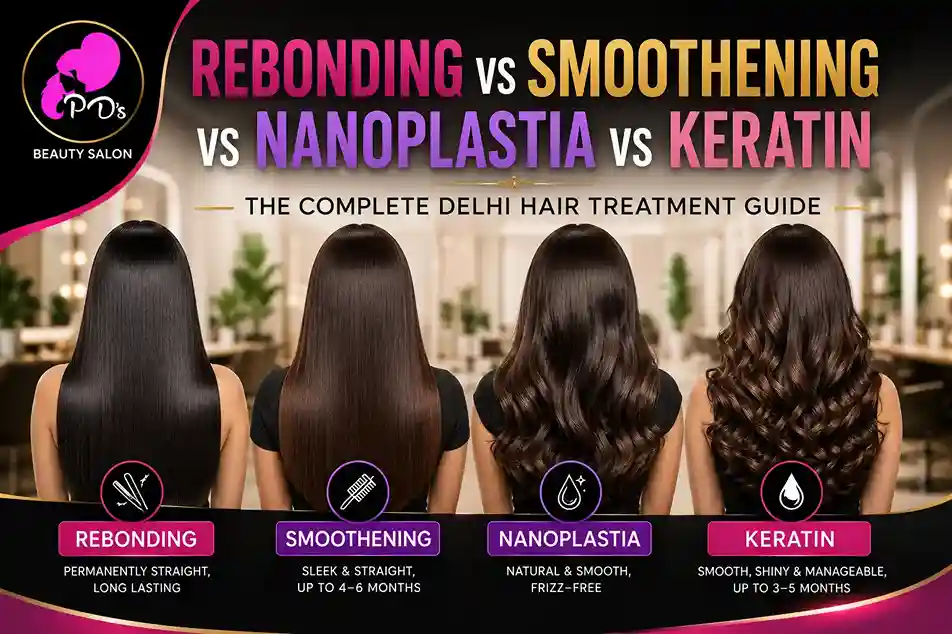
Rebonding, smoothening, nanoplastia, keratin — if you've searched for any of these and ended up more confused than when you started, you're not alone. This guide brings all three of Delhi's most popular hair treatments together in one place, breaks down what each one actually does, how they compare on cost and longevity, and which one fits your hair type. If you've already read our keratin vs smoothening or nanoplastia vs keratin comparisons, this is the piece that ties everything together.
Walk into any salon in Delhi and ask about hair straightening, and you'll hear four words thrown around almost interchangeably — rebonding, smoothening, nanoplastia, and keratin. Clients often assume they're all the same thing with different names. They're not. Each one works on your hair differently, lasts differently, and suits a different hair type and budget.
I get this question every single week: "Pooja ji, mujhe sirf straight chahiye, sabse better kya hai?" And every single time, my answer is the same — it depends on what your hair actually needs, not what's trending.
We've already covered keratin vs smoothening and nanoplastia vs keratin in detail on our blog. This guide brings rebonding into the picture, too, so you have the complete comparison in one place before you decide.
What Is Hair Rebonding?
Rebonding is the most intensive of the four treatments. It permanently restructures your hair's natural bonds using a strong chemical relaxant, then reshapes the hair straight using heat and flat-ironing, before locking it in with a neutraliser. Unlike smoothening, keratin, or nanoplastia — which all soften your natural texture to varying degrees — rebonding makes your hair pin-straight permanently. It doesn't grow out into your natural texture the way the others do; only new hair growth from the root will show your natural pattern again.
This is the treatment for someone who wants dead-straight hair, every single day, with zero effort — and who understands they're making a longer-term commitment to that look.
Rebonding Hair Price in Delhi — What Affects It
Rebonding hair price depends on a few real factors, and none of them is random:
· Hair length — Waist-length hair takes more product and more time than shoulder-length hair
· Hair density — Thick, dense hair needs more product to process evenly
· Product brand used — Professional-grade relaxants cost more than budget alternatives, and the difference shows in your results.
· Technician experience — Rebonding is unforgiving of mistakes; an experienced hand matters more here than in any other treatment
Rebonding is generally the most expensive of the four treatments because it's also the most labour and product-intensive — sessions can run 4 to 6 hours depending on hair length and density. We'll always confirm exact pricing after seeing your hair in person, because quoting blind doesn't serve you or us.
Rebonding vs Smoothening vs Nanoplastia vs Keratin: The Full Comparison
Here's the comparison I walk every client through before they commit to any of these:
Finish — Rebonding gives pin-straight hair with zero natural movement. Smoothening gives a near-permanent, sleek, straight finish. Nanoplastia gives a natural, fluid finish with reduced frizz. Keratin gives a smooth, glossy finish with moderate natural movement.
Duration — Rebonding is the longest-lasting; it doesn't reverse, only grows out. Smoothening lasts 4–6 months. Nanoplastia and keratin both typically last 3–5 months.
Hair Damage Risk — Rebonding carries the highest risk if done incorrectly or too frequently, since it permanently breaks the hair's internal bonds. Smoothening is a moderate risk. Nanoplastia carries the lowest risk since it repairs rather than restructures. Keratin is low risk when applied correctly.
Best Hair Type — Rebonding suits anyone who wants permanent straight hair and understands the commitment. Smoothening suits thick, stubborn, frizzy hair. Nanoplastia suits damaged, fine, or colour-treated hair. Keratin suits thick, coarse, very frizzy hair that needs taming.
Natural Movement — Rebonding has none — it's straight until it grows out. Smoothening has minimal movement. Nanoplastia retains the most natural movement of all four. Keratin retains moderate movement.
Maintenance — Rebonding needs the least day-to-day styling effort but requires careful root touch-ups as hair grows. The other three need sulfate-free shampoo and similar aftercare routines, with nanoplastia being the most forgiving of small lapses.
Cost — Rebonding is typically the highest investment due to time and product use. Keratin runs slightly higher than nanoplastia and smoothening because of the protein-rich formula involved.
Which Treatment Should You Actually Choose?
This is where I always tell clients to stop thinking about what's trending and start thinking about their actual hair and lifestyle.
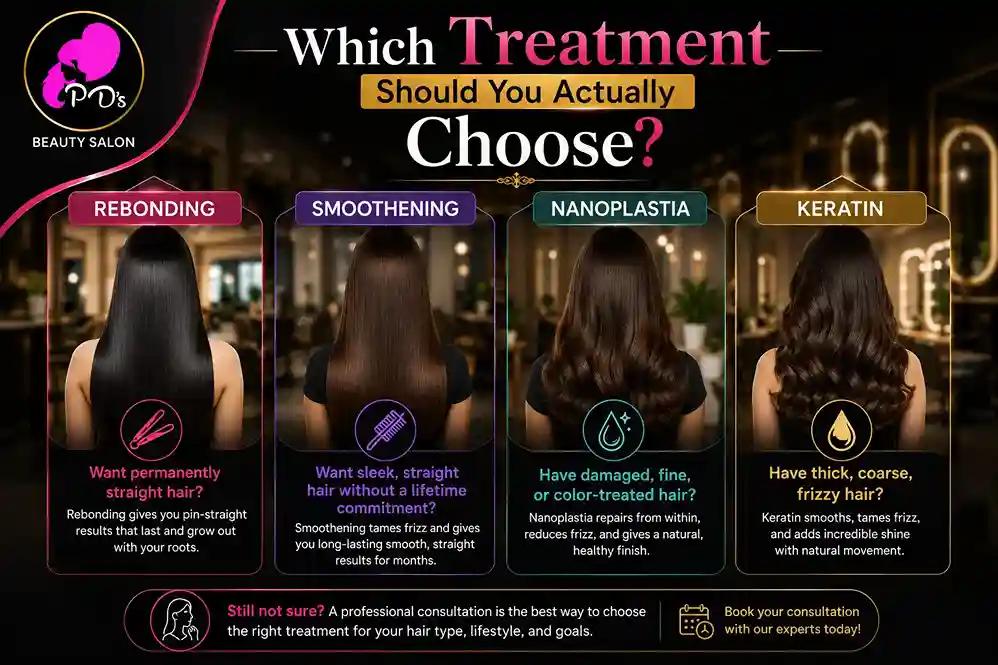
Want permanently straight hair and don't mind committing long-term? Rebonding is your answer. Just know that root touch-ups will be needed every few months as new hair grows in with its natural texture.
Have thick, stubborn, frizzy hair but want it less permanent than rebonding? Smoothening gives you that sleek, straight look without the lifetime commitment.
Dealing with damaged, fine, or colour-treated hair that needs repair, not just straightening? Nanoplastia repairs from within while still smoothing — it's the gentlest option of the four.
Have thick, coarse, very frizzy hair and want serious taming with a glossy finish? Keratin is built for exactly this.
If you're still unsure — and most people are, because all four sound similar on paper — that's exactly what a proper consultation is for. We assess your hair texture, damage level, and what you're actually trying to achieve before recommending anything.
Keratin Treatment Cost in Delhi: A Quick Note
Since keratin treatment cost comes up constantly alongside rebonding pricing, it's worth repeating what we've said before — keratin pricing depends on hair length, density, and product brand, and runs slightly higher than smoothening because of the protein-rich formula itself. We've covered this in more depth in our keratin vs smoothening comparison, including the real cost-cutting risks of going with unusually cheap quotes.
Hair Smoothening in Rohini: Why Aftercare Decides Everything
Whichever treatment you choose, what happens after the appointment matters as much as the treatment itself. A few non-negotiables across all four treatments:
· Wait 72 hours before the first wash.
· Switch to sulfate-free, paraben-free shampoo immediately
· Skip heavy oils for the first two weeks.
· Always use a heat protectant before styling.
· Avoid tying hair tightly for the first week.
These rules apply whether you've gone with rebonding, smoothening, nanoplastia, or keratin — and they're the single biggest factor in how long your results actually last in Delhi's heat, pollution, and hard water.
Nanoplastia Treatment Delhi: A Quick Recap
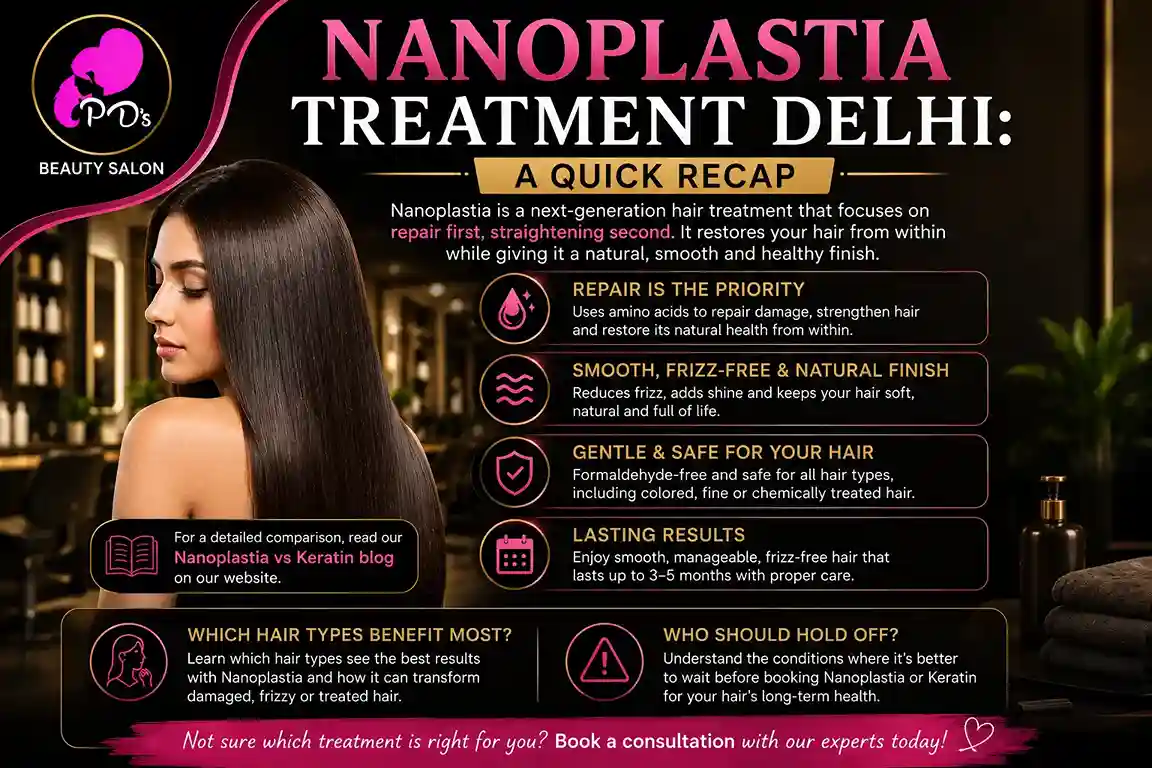
If repair is your priority over straightening, we've gone in-depth on nanoplastia and how it compares specifically to keratin in our nanoplastia vs keratin blog — including which hair types benefit most and who should hold off before booking either treatment.
FAQs
What is the difference between rebonding and smoothening?
Rebonding permanently restructures your hair's bonds for pin-straight results that only change as new hair grows in. Smoothening also straightens but is considered semi-permanent, lasting 4–6 months before the texture gradually returns throughout the hair.
Is rebonding more damaging than keratin or nanoplastia?
Yes, generally. Rebonding involves a stronger chemical process since it permanently alters the hair's bond structure. Keratin and nanoplastia work with the hair's protein rather than breaking it down, making them gentler options.
What is the average rebonding hair price in Delhi?
It varies based on hair length, density, product brand, and technician expertise. We always confirm exact pricing after assessing your hair in person — quoting without seeing the hair isn't something we do.
Can I switch from rebonding to keratin or nanoplastia later?
Yes, but it needs a proper consultation first. Hair that has been previously rebonded is more porous and needs careful assessment before any other chemical treatment is applied on top.
Which treatment lasts the longest?
Rebonding lasts the longest since it permanently restructures the hair — it doesn't fade out, it grows out. Among the semi-permanent options, smoothening typically edges ahead of nanoplastia and keratin.
Do I need to choose just one treatment, or can I combine them over time?
Many clients do move between treatments as their hair needs change — someone who's rebonded in the past might switch to nanoplastia later for repair. This always needs an in-person consultation, since previous chemical treatments affect what's safe to do next.
I always tell my clients — the right treatment isn't the one your friend got or the one trending on Instagram. It's the one that matches your hair's actual condition and what you genuinely want day to day. Come in, let us look at your hair properly, and we'll help you choose with complete honesty.
— Pooja Deveshwar, Founder, PD's Beauty Salon